
In This Article
- Understanding Ceramic Tiles
- Understanding Vitrified Tiles
- Ceramic Tiles vs Vitrified Tiles: Complete Comparison
- Benefits and Drawbacks of Each Tile Type
- Cost Comparison
- Best Applications for Ceramic and Vitrified Tiles
- Which Tile Is More Suitable for Indian Homes?
- Frequently Asked Questions
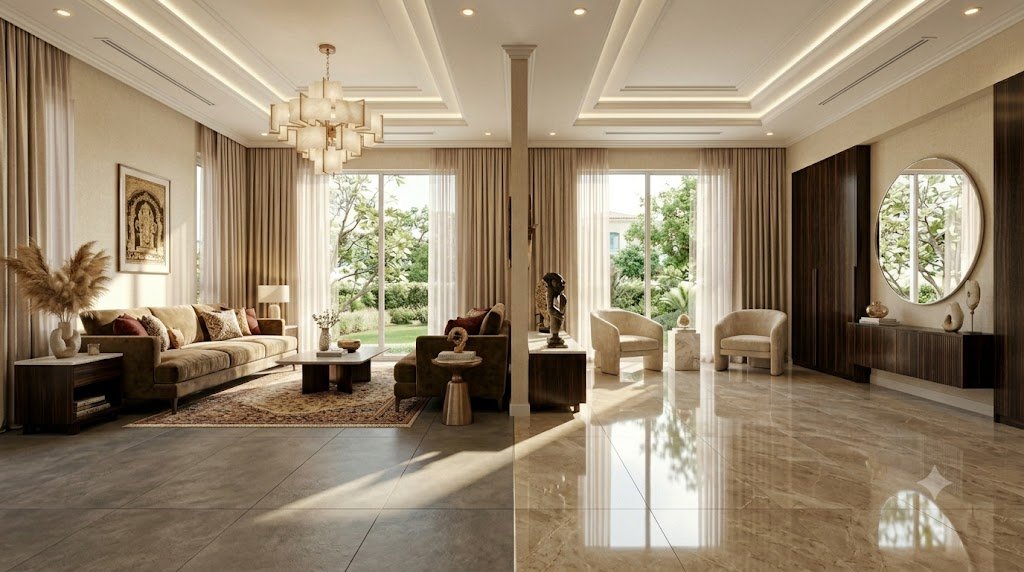
Ceramic Tiles vs Vitrified Tiles: An Overview
Flooring plays a major role in determining the appearance, comfort, and durability of a home. Whether you are constructing a new house or renovating an existing one, selecting the right type of tile can significantly impact both aesthetics and long-term maintenance.
Among the many flooring materials available today, ceramic tiles and vitrified tiles are two of the most preferred options in Indian households. Both are stylish, durable, and available in a wide range of designs. However, they differ in terms of composition, strength, water resistance, maintenance requirements, and price.
Many homeowners struggle to decide between ceramic and vitrified tiles because both offer unique advantages. Understanding how they differ can help you choose the ideal flooring solution based on your budget, lifestyle, and specific room requirements.
In this detailed guide, we compare ceramic tiles and vitrified tiles across various factors to help you make an informed decision.
What Are Ceramic Tiles?
Ceramic tiles are one of the oldest and most commonly used tile materials in the construction industry. They are manufactured using natural clay mixed with water and other minerals. This mixture is shaped into tiles and fired in a kiln at high temperatures to achieve the required hardness and durability.
Most ceramic tiles are coated with a protective glaze that improves their appearance and provides resistance against moisture and stains.
Because of their affordability and design flexibility, ceramic tiles are widely used in residential interiors.
Common Applications of Ceramic Tiles
Ceramic tiles are best suited for areas that experience moderate foot traffic and limited exposure to moisture.
Popular applications include:
- Bedroom floors
- Bathroom walls
- Kitchen backsplashes
- Decorative wall panels
- Living room accent walls
- Study rooms
- Guest rooms
Key Features of Ceramic Tiles
- Available in matte, glossy, and textured finishes
- Lightweight and easy to handle
- Easy to cut and install
- Available in countless colours and patterns
- Cost-effective flooring solution
- Suitable for low-traffic indoor spaces
What Are Vitrified Tiles?
Vitrified tiles are advanced flooring materials manufactured using a combination of clay, silica, quartz, and feldspar. During production, these raw materials are subjected to extremely high temperatures, resulting in a process known as vitrification.
This process creates a dense, glass-like structure that makes the tile exceptionally strong and highly resistant to water absorption.
Due to their durability, modern appearance, and low maintenance requirements, vitrified tiles have become a preferred flooring choice for contemporary homes and commercial spaces.
Common Applications of Vitrified Tiles
Vitrified tiles perform exceptionally well in areas exposed to moisture and heavy usage.
They are commonly used in:
- Living rooms
- Kitchens
- Bathrooms
- Hallways
- Balconies
- Outdoor areas
- Offices
- Commercial establishments
Key Features of Vitrified Tiles
- Superior strength and durability
- Very low water absorption
- Excellent stain resistance
- Scratch-resistant surface
- Easy maintenance
- Premium and modern appearance
Ceramic Tiles vs Vitrified Tiles: Detailed Comparison
| Feature | Ceramic Tiles | Vitrified Tiles |
|---|---|---|
| Composition | Clay and water | Clay, silica, quartz and feldspar |
| Manufacturing Process | Fired clay tiles | High-temperature vitrification process |
| Strength | Moderate | High |
| Durability | Good | Excellent |
| Water Absorption | Around 3% | Less than 0.5% |
| Stain Resistance | Moderate | High |
| Scratch Resistance | Moderate | Excellent |
| Maintenance | Requires regular care | Easy to maintain |
| Finish Options | Matte, textured, glazed | Glossy, polished, matte |
| Lifespan | 10–15 years | 15–25 years |
| Cost | Affordable | Premium |
| Best Application | Walls and light-use areas | Floors and high-traffic areas |
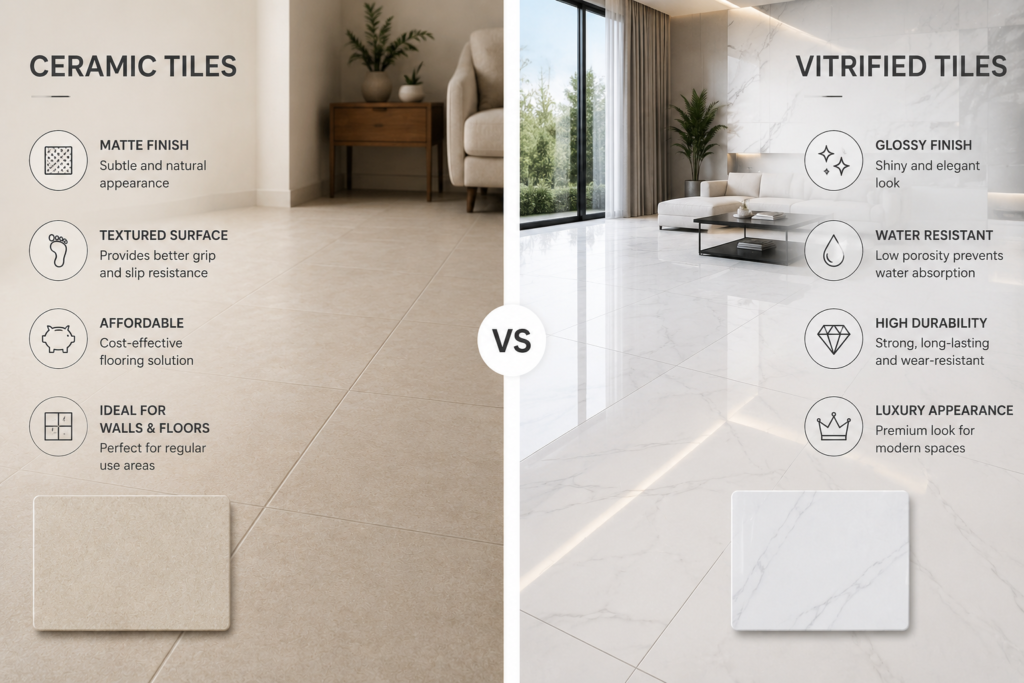
Key Differences Between Ceramic and Vitrified Tiles
1. Composition and Manufacturing
The primary difference lies in the raw materials and manufacturing process.
Ceramic tiles are mainly made from clay and water, while vitrified tiles contain additional materials such as silica, quartz, and feldspar. These materials increase the density and strength of vitrified tiles.
As a result, vitrified tiles are harder, stronger, and less porous than ceramic tiles.
2. Water Absorption Capacity
Water absorption is one of the most important factors to consider when selecting flooring.
Ceramic tiles absorb a small amount of water, usually around 3%. Although this is relatively low, it still makes them more porous than vitrified tiles.
Vitrified tiles absorb less than 0.5% water, making them highly suitable for wet areas such as bathrooms, kitchens, and balconies.
3. Durability and Strength
If durability is your priority, vitrified tiles have a clear advantage.
Their dense composition enables them to withstand heavy foot traffic, daily wear, and accidental impacts more effectively than ceramic tiles.
For busy households and commercial spaces, vitrified tiles often provide better long-term performance.
4. Maintenance Requirements
Ceramic tiles require regular cleaning and immediate attention to spills to prevent staining.
Vitrified tiles, on the other hand, have a non-porous surface that prevents stains from penetrating. This makes routine maintenance easier and less time-consuming.
5. Appearance and Design
Ceramic tiles usually offer a more natural and textured appearance. They are often chosen for decorative walls and artistic interiors.
Vitrified tiles provide a sleek, polished, and uniform look that complements modern interior designs.
Advantages of Ceramic Tiles
Despite the growing popularity of vitrified tiles, ceramic tiles continue to be a preferred option for many homeowners.
Budget-Friendly Option
Ceramic tiles are generally more affordable than vitrified tiles, making them suitable for projects with limited budgets.
Wide Range of Designs
They are available in numerous colours, patterns, textures, and decorative finishes, allowing homeowners to achieve different design styles.
Easy Installation
Their lightweight structure makes transportation, cutting, and installation easier.
Convenient Replacement
Individual ceramic tiles can be replaced without disturbing the surrounding flooring.
Limitations of Ceramic Tiles
Before making a decision, it is important to consider some drawbacks.
- Less durable than vitrified tiles
- Higher water absorption rate
- More susceptible to stains
- Not ideal for outdoor applications
- Can wear out faster in high-traffic areas
Advantages of Vitrified Tiles
Exceptional Durability
Vitrified tiles are designed to handle heavy usage without losing their appearance.
Excellent Water Resistance
Their low porosity makes them highly resistant to moisture and water damage.
Stain Resistance
Common household stains such as tea, coffee, oil, and food spills can be cleaned easily.
Minimal Maintenance
Regular sweeping and mopping are usually sufficient to keep vitrified tiles looking new.
Long Service Life
With proper installation and maintenance, vitrified tiles can remain in excellent condition for decades.
Limitations of Vitrified Tiles
While vitrified tiles offer several benefits, they also have some limitations.
- Higher initial cost
- Installation may require skilled labour
- Replacing a single tile can be challenging
- Highly polished surfaces may become slippery when wet
Ceramic Tiles vs Vitrified Tiles: Price Comparison
Budget is often a major factor when selecting flooring materials.
Ceramic tiles are generally available at lower prices, making them a cost-effective solution for homeowners looking to reduce renovation expenses.
Vitrified tiles are more expensive due to their manufacturing process and enhanced performance characteristics. However, their durability and lower maintenance requirements often provide better value over the long term.
If your priority is affordability, ceramic tiles may be the better choice. If you are looking for durability and long-term savings, vitrified tiles are worth considering.
Where Should You Use Ceramic Tiles?
Ceramic tiles work best in areas with limited foot traffic and lower exposure to moisture.
Recommended Areas
- Bedrooms
- Guest rooms
- Study rooms
- Decorative walls
- Kitchen backsplashes
- Interior wall cladding
These applications allow homeowners to enjoy the design benefits of ceramic tiles without placing excessive stress on the material.
Where Should You Use Vitrified Tiles?
Vitrified tiles are suitable for areas that demand strength, durability, and moisture resistance.
Recommended Areas
- Living rooms
- Kitchens
- Bathrooms
- Hallways
- Staircases
- Balconies
- Outdoor spaces
- Commercial establishments
Their robust construction makes them ideal for spaces that experience continuous use.
Which Tile Is Better for Indian Homes?
There is no universal answer because the best choice depends on where the tiles will be installed and how they will be used.
Choose Ceramic Tiles If:
- You are working with a limited budget.
- You need wall tiles.
- The area experiences light to moderate usage.
- Decorative designs are a priority.
Choose Vitrified Tiles If:
- You require durable flooring.
- The area is exposed to moisture regularly.
- Low maintenance is important.
- The space receives heavy foot traffic.
For most modern Indian homes, vitrified tiles are generally preferred for flooring because they offer better durability, moisture resistance, and longevity. However, ceramic tiles continue to be an excellent option for walls and low-traffic indoor spaces.
Many homeowners combine both tile types to achieve the perfect balance between style, performance, and cost.
How to Identify Ceramic Tiles and Vitrified Tiles
Check the Surface
Ceramic tiles usually have a textured or matte finish, while vitrified tiles often feature a smoother and more polished surface.
Look at the Tile Body
Ceramic tiles typically reveal a reddish or brown clay base. Vitrified tiles generally have a lighter and more uniform body.
Perform a Sound Test
Gently tap the tile.
Ceramic tiles usually produce a dull sound, whereas vitrified tiles produce a sharper and clearer sound because of their higher density.
Frequently Asked Questions
Are vitrified tiles stronger than ceramic tiles?
Yes. Vitrified tiles are denser and more durable, making them stronger than ceramic tiles.
Which tile is better for bathrooms?
Vitrified tiles are generally preferred because they absorb very little water and offer better moisture resistance.
Are ceramic tiles less expensive than vitrified tiles?
Yes. Ceramic tiles are usually more affordable in terms of material cost and installation charges.
Can vitrified tiles be installed outdoors?
Yes. Their strength, durability, and water resistance make them suitable for outdoor applications.
Which tile offers a longer lifespan?
Vitrified tiles typically last longer because they are more resistant to wear, stains, and moisture.
Final Thoughts
Both ceramic tiles and vitrified tiles offer unique advantages. Ceramic tiles are affordable, versatile, and ideal for walls and low-traffic spaces. Vitrified tiles provide superior durability, excellent water resistance, and easier maintenance, making them a preferred choice for flooring in modern Indian homes.
The right decision ultimately depends on your budget, design preferences, and usage requirements. By understanding the strengths and limitations of both options, you can choose a flooring solution that enhances the beauty, comfort, and value of your home for years to come.
Explore Quality Tiles at Durga Marble
At Durga Marble, we offer an extensive collection of ceramic tiles, vitrified tiles, marble, granite, and premium flooring solutions to suit every style and budget. Whether you are building a new home or renovating an existing space, our team can help you find the perfect flooring material for your project.

Harsh Sharma is a seasoned tile and marble expert from Samalkha, Haryana. A BBA graduate, Harsh has been immersed in the world of tiles since childhood, gaining extensive knowledge and hands-on experience in the industry.
Currently, he manages operations at his family business, Durga Marble, alongside his father, overseeing all aspects of the enterprise with dedication and expertise. Through his writings on the Durga Marble website, Harsh shares his in-depth insights on tiles, flooring, and home décor, helping homeowners, designers, and enthusiasts make informed decisions.
Passionate about educating others, Harsh combines professional experience with a practical understanding of tiles, offering clear, reliable, and actionable guidance to readers across India.